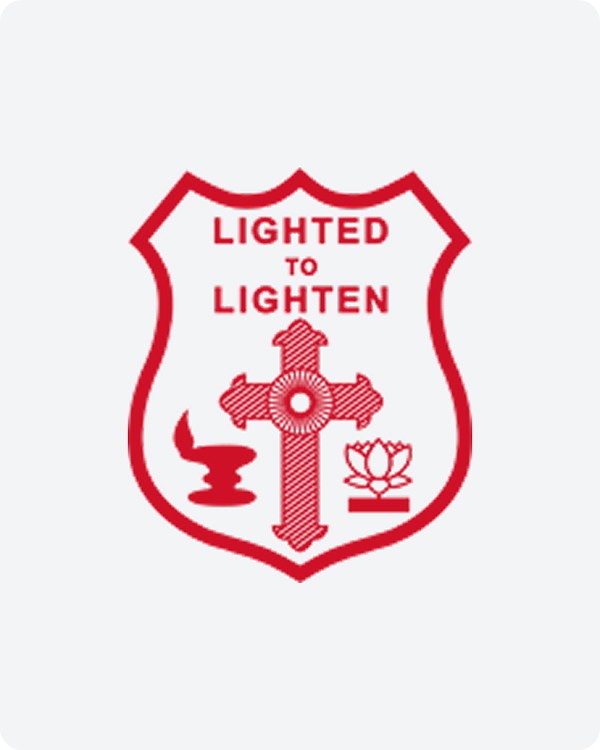
The cross placed in the center represents the centrality of Jesus Christ in the church and its mission. It is a proclamation that God himself came and atoned for all humankind and the redemption is freely available by faith in Jesus Christ without regard to any form of karma.
Overview
It is traditionally believed that St. Thomas (Mar Thoma in Syriac), the disciple of Jesus Christ, came to India in AD 52 and established the Church on the Malabar Coast, then known as Malankara. Being rooted in the Bible, the Church maintains its Episcopal heritage along with a value-oriented democratic form of administration. The Church believes in Jesus Christ, the God incarnate for the redemption of humankind, and in the Triune God revealed by Him, who Himself is one among the Trinity. It cherishes its Oriental heritage and Episcopacy as a gift of God, accepting the Holy Bible as the basis for all matters of faith and doctrine, and the Nicene Creed as formulated in accordance with Scripture. The Church is regarded as a ‘bridge’ church in the ecumenical world. It identifies its goal and function as being the repository of the divine doctrines revealed by Jesus Christ and proclaimed by His Apostles; to maintain these doctrines in their purity; and to promote the spiritual life of its members through the administration of the sacraments and the ministry of the Word.
The Church affirms that the people of God are sent into the world to partake in the soteriological mission of God to unite everything in Jesus Christ through the ministry of reconciliation begun in Him. The Church is blessed and enriched by the leadership of the Metropolitan, Episcopas, ordained clergy and deacons, with the Metropolitan serving as the supreme head. The laity has full participation in the priestly ministry given through the Church by Christ and is called to profess and practice Christian truths in daily life. At present, the Church is led by twelve Bishops and is headed by Most Rev. Dr. Theodosius Mar Thoma Metropolitan, the 22nd Malankara Metropolitan to occupy the Holy Apostolic Throne of St. Thomas. It is served by 1184 clergy through fourteen dioceses and ministers to approximately 1.6 million people worldwide, with its headquarters located at SCS Campus, Thiruvalla, Kerala, India.
To maintain these doctrines in their purity
To be the repository of the divine doctrines revealed by Jesus Christ and proclaimed by His Apostle
To promote the spiritual life of its members through the administration of sacraments and by the ministry of the WORD
To make disciples of all nations by the proclamation of the Gospel to all the world, and through the administration of Holy Baptism in the name of triune God
Story behind the logo
The Cross
The Ashoka Chakra
The Ashoka Chakra is the symbol of India and represents the Indian roots of the church. Traditionally, the Chakra as presented by the Emperor Ashoka, was a symbol in denoting the Wheel of Life and Cosmic Order (or Dharmachakra). By placing the wheel at the heart of the Cross, it is a declaration that life finds its ultimate salvation in the atoning sacrifice of Jesus once and for all. It symbolises the completion and closing of the wheel of life for all those who follow the Bhakthi Marga (path of righteousness) in Jesus Christ.
The Hand Lamp
The hand lamp represents the lamp that is carried in all believers. It reminds all believers to be the light of the world and act as a witness to give the light of salvation for others in their daily life. It also seeks to remind to pay diligent attention to the study of the word of God
The Lotus
‘The Lotus represents holy living and is traditionally part of the offering of sacrifices of praise and adoration in the Indian tradition to God. It reminds believers to live holy despite the circumstances around them and exude the fragrance of God