
Explore the rich and ancient history of the Mar Thoma Syrian Church,
tracing its origins back to the apostolic mission of St. Thomas and its
journey through centuries of challenges, resilience, and spiritual growth
in India.
The vision of the Mar Thoma Church is to grow as a community that reflects Jesus Christ, mature in faith, united in the Holy Spirit, and living as the Body of Christ. Its mission is to preserve and teach the truth revealed by God through Jesus Christ and handed down by the Apostles. The Church seeks to preach the Word of God, administer the Sacraments, and live as faithful witnesses. It aims to make disciples of all nations by proclaiming the Gospel and nurturing people into a deeper fellowship with Christ, while promoting the spiritual growth of all its members. Depending on the guidance and power of the Holy Spirit, the Church continues Christ’s work of reconciliation in the world, believing that all who accept the authority of Christ share equal responsibility in this mission.
The St. Thomas Christians, historically known as Nazranis (followers of Jesus of Nazareth), have flourished over the centuries, preserving a distinct identity and a rich cultural heritage. Nazaranis emerged as a prominent trading community, held influential positions in society, and frequently enjoyed royal patronage. Celebrated for their balanced synthesis of the Syrian Christian tradition with indigenous Indian customs, the Nazranis developed a unique and enduring expression of Christian life that continues to shape the region’s cultural and religious landscape.
From the early centuries onwards, the Church in India developed strong ecclesiastical ties with the Church of the East, often referred to as the Persian Church or the Chaldean Church. Bishops and clergy from Persia came to India, bringing with them Syrian liturgical traditions, texts, and ecclesiastical structures, which greatly influenced the Indian church.
The Nazrani community was shaped by two major Syrian Christian migrations from West Asia. The first, traditionally dated to the 4th century, came with Knāi Thoma and several families from Mesopotamia or Persia, who strengthened the St. Thomas Christian community and deepened its ties with the Persian Church. The second migration in AD 823 brought Mar Sabor and Mar Proth, whose arrival led to renewed ecclesiastical life. Their presence is linked to the granting of the Tharisapalli Copper Plates, awarding the community land, privileges, and trade rights. These plates, among India’s oldest legal documents, highlight the high esteem Christian traders enjoyed. Today, two of the original plates remain preserved by the Mar Thoma Church, standing as enduring witnesses to this ancient heritage.
The arrival of the Portuguese in the 16th century marked a significant turning point. They sought to bring the St. Thomas Christians under the Papal rule, leading to decades of conflict and attempts to Latinise the ancient church, disrupting its traditional Syrian practices and autonomy. This effort culminated in the Synod of Diamper, convened in 1599 by Archbishop Aleixo de Menezes. Rather than a dialogue or mutual enrichment, the synod was a coercive attempt by the Portuguese to dismantle the ancient Syrian identity of the community and forcefully impose Latin customs. Many cherished East Syrian theological works were condemned or destroyed, traditional liturgical practices were replaced, and the ecclesiastical autonomy that the community had preserved for centuries was abruptly suppressed.
The roots of later Anglican involvement in the Malankara Church can be traced to the early 19th century, when the Scottish chaplain Claudius Buchanan visited Kerala. Buchanan met Cheppad Mar Dionysius II, the Malankara Metropolitan, in a historic encounter that opened a new phase of engagement between the ancient St. Thomas Christians and Western Protestant missionaries. This collaboration, known as the CMS Mission of Help (1836–1840), aimed to support the church in renewing its educational and administrative structures in a rapidly changing social environment.
One of the most enduring contributions of this partnership was the setting up of the Kottayam Seminary. Although the relationship between the Malankara Church and the CMS later faced challenges, the initial period of cooperation left a lasting positive impact, particularly in the spheres of education, literacy, and theological formation.
The Malankara Mar Thoma Syrian Church traces its origins to the apostolic mission of St. Thomas, one of the twelve apostles of Jesus Christ, who is believed to have arrived on the Malabar Coast of Kerala, India, in 52 AD, and became a martyr in St. Thomas Mount in present-day Chennai around 72.
Tradition holds that St. Thomas the Apostle founded eight Christian communities along the Malabar Coast, establishing churches in places such as Kodungallur, Palayoor, Paravoor, Kokkamangalam, Chayyal, Niranam, and Kollam. These early communities became the very foundation upon which Christianity in India took root and flourished. It is widely believed that the present Niranam Jerusalem Mar Thoma Church stands on the site where St. Thomas himself erected a cross, marking one of the earliest centres of Christian worship in the region.
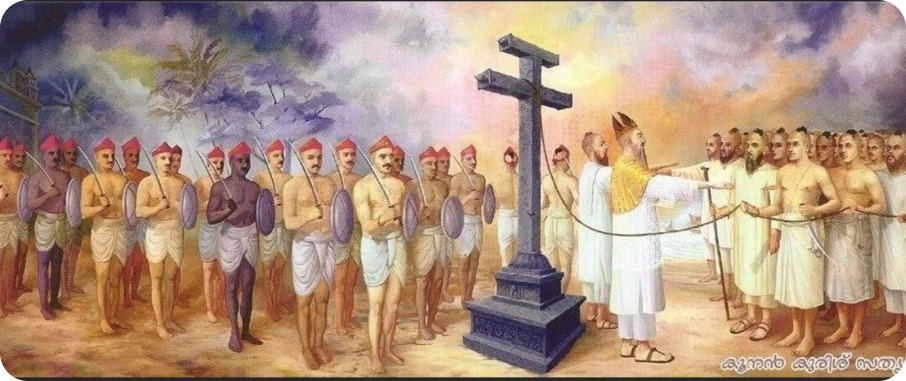
The Coonen Cross, a symbol of resilience and the historical declaration of independence by the St. Thomas Christians.
From the arrival of St. Thomas to the transformative reformation, our history is a testament to divine guidance and human perseverance.
The journey of the Mar Thoma Church beyond its homeland, establishing dioceses and parishes across the world.
Tracing the origins to the apostolic mission of St. Thomas in 52 AD, establishing early Christian communities in Kerala.
The significant 19th-century reformation movements that revitalized the church with evangelical fervor and theological clarity.
From the arrival of St. Thomas to the transformative reformation, our history is a testament to divine guidance and human perseverance.
Active engagement in social justice, humanitarian aid, and community development, reflecting Christ’s love.
Upholding the Holy Bible as the ultimate source of faith and practice, guiding all spiritual and doctrinal matters.
A strong commitment to spreading the Gospel and fostering spiritual growth through evangelistic endeavors.
The reformation brought about significant changes, including the translation of the liturgy into Malayalam for congregational participation, emphasis on biblical preaching over traditional rituals, removal of prayers for the dead, and the abolition of veneration of icons and saints. This also included the rejection of auricular confession and the doctrine of purgatory, advocating for salvation by grace through faith alone.
The reform movement faced severe resistance from traditionalist factions within the church and external religious authorities. This led to legal battles over church property and jurisdiction, ultimately resulting in the formal separation and establishment of the Mar Thoma Syrian Church. These conflicts, though challenging, solidified the identity and resolve of the reformers.
A Spiritual Beacon
Witness the genesis of the largest annual Christian convention in Asia, born out of the spiritual fervor and evangelical zeal of the Reformation Era. The Maramon Convention became a powerful platform for evangelism, spiritual renewal, and social reform, uniting believers and spreading the message across communities, fostering a deeper understanding of the reformed faith.
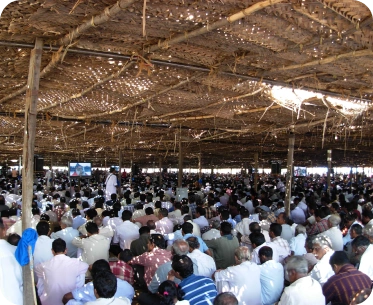
Delve into the vibrant Post-Reformation Era, characterized by. rapid expansion, institutional development, and a strong commitment to ecumenical relations. The Mar Thoma Church embraced a global mission, establishing new parishes and engaging in social upliftment while preserving its distinct heritage and evangelical fervor.
Following the reformation, the Mar Thoma Church experienced significant growth both within Kerala and through diaspora communities. Missionaries carried the message to new regions, leading to the establishment of numerous new parishes and a broadened demographic base for the church, reaching across continents.
The Post-Reformation period saw the formalization of the church’s administrative and spiritual governance structures. This included the establishment of dioceses, the strengthening of the Episcopal Synod, and the development of a democratic organizational framework to manage its expanding global presence and diverse ministries.
Ecumenical Engagements
The church actively established theological seminaries, schools, colleges, hospitals, and social service organizations. These institutions played a crucial role in community development, education, and healthcare, reflecting the church’s commitment to holistic ministry and social justice.
The Mar Thoma Church demonstrated an early and consistent commitment to ecumenism, actively participating in international bodies like the World Council of Churches (WCC) and the Christian Conference of Asia (CCA). It engaged in constructive dialogues with other Christian denominations, fostering unity and mutual understanding while upholding its reformed identity.

Beyond its local growth, the church developed a strong missionary spirit, sending missionaries to various parts of India and abroad. This led to the formation of Mar Thoma parishes and mission centers across the globe, establishing a significant international presence and contributing to global Christianity.


